
Dental Articles - Calgary
The Role of Biofilm in Gum Disease and Cavities
Posted by Cougar Ridge Dental on Wed, 29 Jul 2026
Dental biofilm (plaque) plays a central role in cavities and gum disease. Learn how biofilm forms, why it matters, and how Calgary patients can manage it at home and at the dentist.
.jpg "The Role of Biofilm in Gum Disease and Cavities")
Every surface in your mouth — teeth, gums, tongue, and dental work — is coated with a thin, sticky layer of bacteria called biofilm. You may know it better as dental plaque. Understanding how biofilm forms and what it does can help Calgary patients make informed choices about their oral care.
At Cougar Ridge Dental, we regularly explain the role of biofilm to patients during exams and dental hygiene cleanings. Here is what you need to know about this common but often misunderstood part of oral health.
What Is Dental Biofilm?
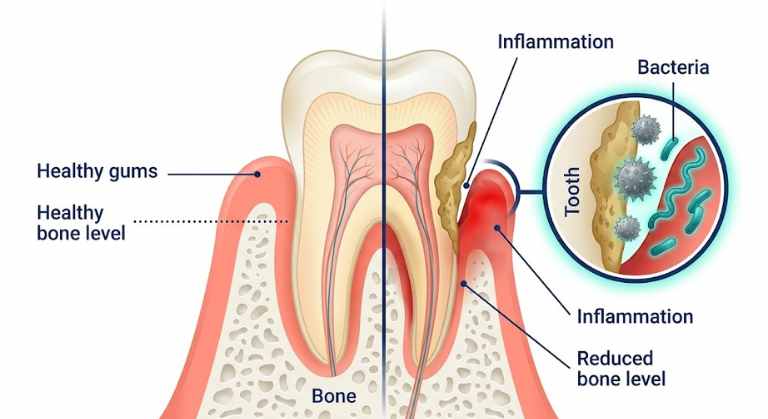
Biofilm is a community of microorganisms that adhere to surfaces in the mouth. Within minutes of brushing, bacteria begin to attach to your teeth. If not removed, they multiply and form a structured layer protected by a matrix of proteins and sugars.
This process happens to everyone. Biofilm is not a sign of poor hygiene on its own — it is a natural occurrence. The concern arises when biofilm is allowed to accumulate and mature, because the types of bacteria within it can shift toward species associated with cavities and gum disease.
How Biofilm Leads to Cavities
Tooth decay begins when certain bacteria in biofilm metabolize sugars from food and drinks, producing acids as a byproduct. These acids lower the pH on the tooth surface and gradually dissolve enamel — the hard outer layer of your teeth.
Key factors that increase cavity risk related to biofilm include:
- Frequent snacking or sipping — Regular exposure to sugars gives bacteria a steady fuel source.
- Difficulty reaching certain areas — Deep grooves, tight contacts between teeth, and areas around orthodontic appliances can harbour biofilm.
- Dry mouth — Reduced saliva flow means less natural rinsing and acid neutralization.
- Irregular brushing and flossing — Biofilm that remains undisturbed matures and becomes harder to remove.
When biofilm hardens into tartar (calculus), it can no longer be removed with a toothbrush alone. At that stage, professional cleaning is needed to disrupt the bacterial community and protect the tooth surface.
How Biofilm Contributes to Gum Disease
Biofilm along the gumline triggers the body's immune response. In its early stage — gingivitis — gums may appear red, swollen, or bleed during brushing. Gingivitis is generally reversible with improved home care and professional cleaning.
If biofilm and tartar remain at the gumline, inflammation can progress to periodontitis, a more advanced form of gum disease. In periodontitis, the supporting structures around the teeth — including bone — may be affected. Symptoms can include:
- Persistent bad breath
- Gums that pull away from teeth
- Loose or shifting teeth
- Discomfort when chewing
Early detection through regular dental visits is important because gum disease often develops without obvious pain. Your dental team can assess the health of your gums and recommend treatment or a maintenance schedule suited to your situation.
Biofilm and Your Daily Routine
Disrupting biofilm before it matures is the goal of daily oral hygiene. Effective strategies include:
Brushing
Brush twice daily with fluoride toothpaste, angling the bristles toward the gumline. Electric toothbrushes can be helpful for some patients, but technique matters more than the type of brush.
Flossing or Interdental Cleaning
Cleaning between teeth removes biofilm from surfaces your brush cannot reach. If traditional floss is difficult to use, interdental brushes or water flossers may be appropriate alternatives — ask your hygienist what fits your mouth best.
Professional Cleanings
Even with excellent home care, some biofilm and tartar accumulate in hard-to-reach areas. Regular professional cleanings remove this buildup and allow your dental team to monitor changes in your gum health over time.
Some patients — including those with a history of gum disease, smokers, or people with certain medical conditions — may benefit from more frequent cleanings. Our article on high-risk oral health and cleaning frequency explores this topic in more detail.
Modern Approaches to Managing Biofilm
Dental technology has evolved to address biofilm more precisely. One example is Guided Biofilm Therapy (GBT), which uses a disclosing solution to make biofilm visible and specialized airflow technology to remove it gently. This approach focuses on identifying bacterial buildup before it contributes to larger problems.
If you are curious about how this differs from a traditional cleaning, our guide on what Guided Biofilm Therapy is and whether it may be right for you provides a helpful overview.
When to See a Dentist in Calgary
Biofilm management is most effective when home care and professional care work together. Consider scheduling a dental visit if:
- It has been more than six months since your last checkup
- Your gums bleed regularly when you brush or floss
- You notice increased sensitivity or visible tartar buildup
- You are a new patient looking to establish a preventive care routine
At Cougar Ridge Dental, we provide comprehensive preventive care for patients across southwest Calgary. Whether you need a routine cleaning or have questions about gum health, our team can evaluate your needs and recommend a plan based on your oral health history.
Ready to take the next step? Book your appointment online or contact us to schedule a visit. Managing biofilm is an ongoing process, and starting with a thorough exam is a practical way to protect your teeth and gums for the long term.
Dentist Calgary
